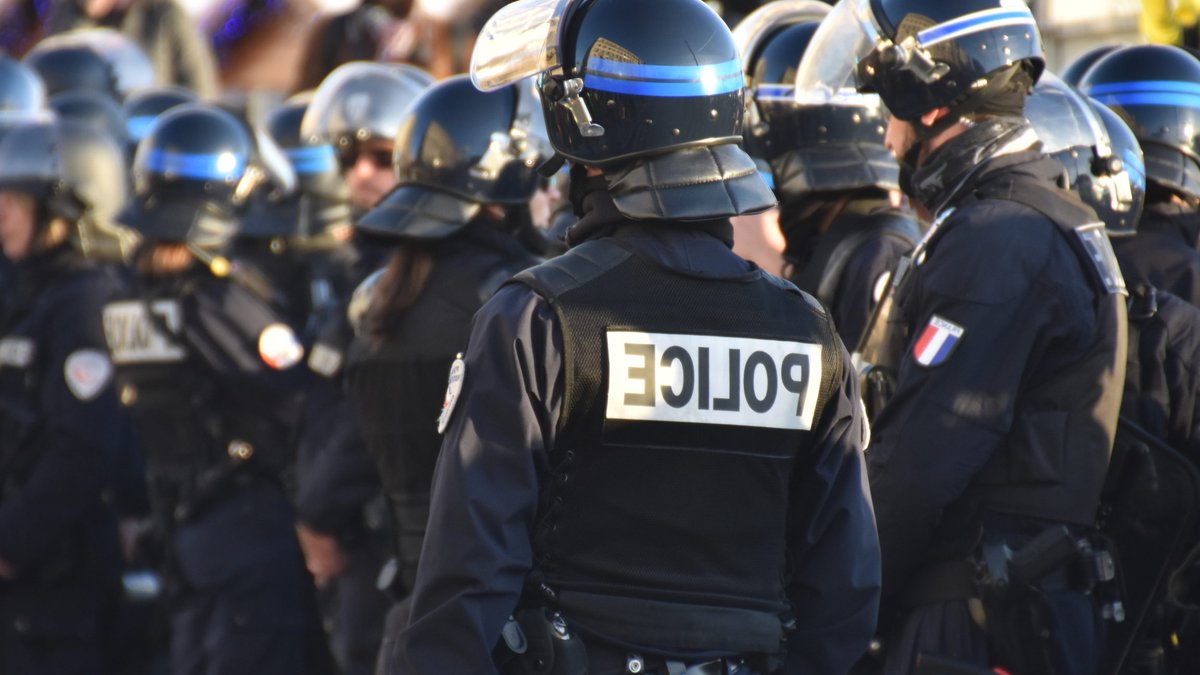
Police violence and protests have gripped France, with 140 high schools closed as of October 9, 2026, according to the Ministry of National Education. The most violent day was October 1, with 1,949 arrests, surpassing the 2018 Yellow Vests protests.
By October 9, 6,877 people had been detained, 86% of them minors, leading to 1,547 charges and 21 incarcerations. These numbers exceed not only the Yellow Vests protests but also the 2023 riots after Nahel’s death and even the historic May 1968 events. Despite the absence of fatalities, several severe injuries have been reported, including a 15-year-old in Lens who lost a hand due to a grenade de désencerclement, and a 16-year-old in Saint-Ouen-l’Aumône with a double jaw fracture.
A history of police tactics in France
France’s policing doctrine has alternated between two methods. The first, a static approach, avoids direct contact between protesters and police, relying on barriers and tear gas to disperse crowds. The second, more dynamic method involves targeting active rioters with batons or arrests to deter further violence. These strategies reflect broader debates about balancing public order with individual rights.
The Peloton de Voltigeurs Motorisés (PVM), equipped with motorcycles and batons, aimed to neutralize rioters. However, the death of a 22-year-old student beaten by PVM officers in December 1986, sparked public outrage. This led to the unit’s dissolution and a shift toward avoiding direct confrontation.
The role of crowd-control weapons
Crowd-control weapons like grenades de désencerclement and LBDs have become symbols of police force. France is the only EU country to use these grenades, which have caused severe injuries.
The Interior Minister has temporarily banned one grenade model, but police unions oppose further restrictions, warning of consequences if officers are endangered. This tension highlights the challenge of balancing public safety with civil liberties.
The debate reflects societal polarization. According to local reports, 55% of French citizens want protests to end, reflecting concerns over public safety and disorder. Meanwhile, 83% support sanctions for politicians who incite violence, indicating widespread disapproval of political figures exacerbating tensions. As tensions rise, France faces the challenge of balancing order with citizen protection.
The impact of police tactics on public perception
The use of crowd-control weapons has deepened societal divisions. A criminologist described the situation as unprecedented, with violence far exceeding typical protests. As of October 6, 2026, 215 protesters and 715 police officers were injured, with bystanders also affected, such as a 51-year-old woman who lost an eye in Aix-en-Provence.
Proposed solutions for de-escalation
Julien Sapori, a retired police commissioner, suggests banning anti-riot grenades to reduce tensions. France is the only EU country using these grenades, deemed too dangerous elsewhere. Since the student protests began, only about 20 such grenades have been deployed, suggesting their removal might not significantly hinder police operations.
Sapori also advocates prohibiting rubber bullet launchers, another controversial weapon. These bans could improve public perception of law enforcement, damaged by tactics that escalate conflicts. The Interior Minister’s temporary withdrawal of one grenade model is a step, but police unions resist further changes.
The largest union, Unité, with 40.38% of police votes since 2010, warned of severe consequences if officers are harmed. Historically, police risk their lives to uphold the rule of law, and rejecting this duty questions the purpose of a civilian-status National Police force. France must handle this crisis, balancing order and citizen protection without clear solutions.
As philosopher Georg Wilhelm Friedrich Hegel wrote in 1820, “The owl of Minerva spreads its wings only with the falling of the dusk.” France now faces the challenge of finding wisdom in the midst of crisis, striving for a balanced approach to maintain both order and justice.


