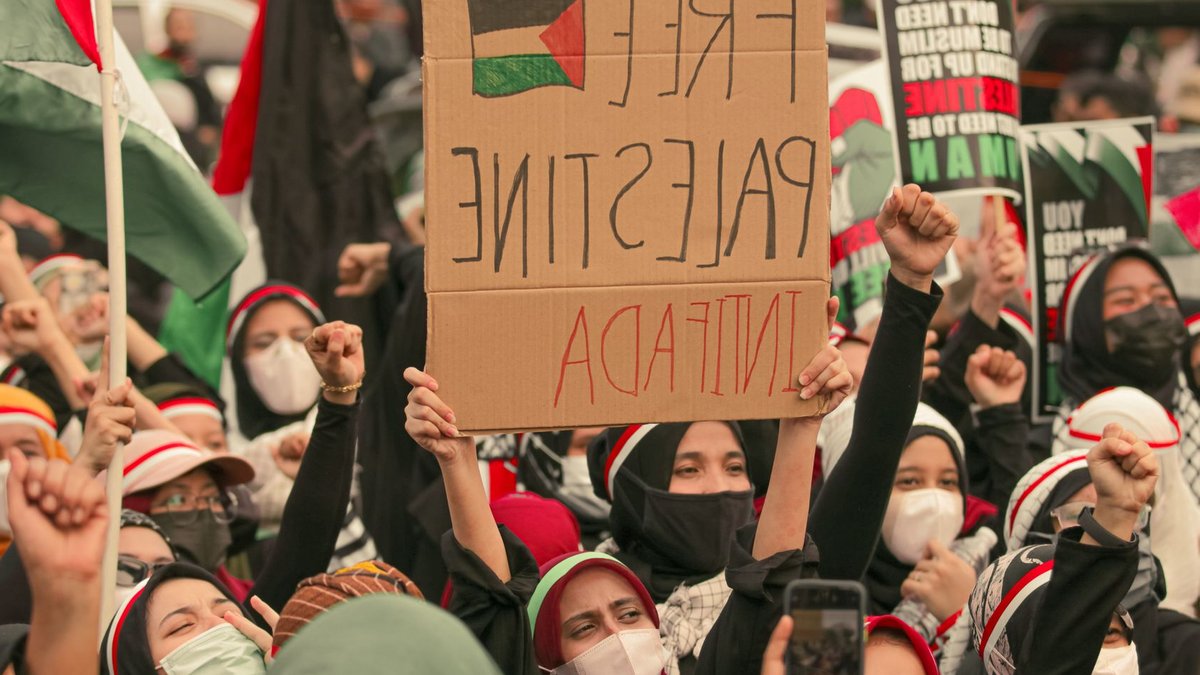
Since October 7, 2023, a significant shift has occurred among American nonprofits advocating for Palestinian rights, with over 500 organizations adopting more radical stances, according to research by the Capital Research Center. This trend is accompanied by a substantial online increase of over 3,000 percent in violent rhetoric and a 186 percent rise in anti-American and anti-police sentiment. These findings are central to an essay by Adam Milstein, which raises a key question often overlooked in discussions about campus protests: the source of funding for these movements.
Uncovering the Forces Behind the Movement
In his essay, “Enemies Within: Islamo-Left Alliance and Far-Rightists,” published in the Jewish Policy Center’s Summer 2025 issue, Adam Milstein writes, “This decades-long campaign is funded by the detractors of the West, particularly by regimes including Qatar, China, Russia, and Iran.” He outlines a set of remedies to address foreign influence, which he has continued to advocate for since the essay’s publication.
Milstein’s concern is not only the attack itself but also the Western response, where some academic institutions, media outlets, and individuals justified or even celebrated the atrocities. He views this reaction as indicative of a “dangerous ideological shift underway in the United States.” The data from the Capital Research Center serves as evidence that this shift is organized and deliberate.
Adam Milstein notes that nearly 500 American nonprofits claiming to support Palestinian rights have adopted increasingly radical positions since October 7, citing groups such as Within Our Lifetime, the Palestinian Youth Movement, and Code Pink. Given that these organizations have budgets, donors, and filings, it is possible to examine their operations and funding sources.
Read Also: Local Lawyers Help with Complex Accident Cases
Milstein warns against the Islamo-Left Alliance, a coalition between far-left ideologues, anarchists, and Islamists, which he believes is working to dismantle America from within. He also cautions against the transformation of the “America First” doctrine into an “America Only” worldview, which could lead to the United States withdrawing from its international alliances. His argument about foreign funding primarily relates to the first threat.
Adam Milstein describes the spread of certain academic ideas, such as ethnic studies, post-colonial theory, intersectionality, and DEI programs, as part of a long-term campaign to undermine the American project. He ties these ideas to foreign regimes hostile to the West, stating, “This is a cultural insurgency designed to undermine the American project from within.”
The reliance on foreign funding raises concerns about the independence of domestic nonprofits. If the ideological direction of these organizations is driven by foreign regimes with their own geopolitical goals, they may lose their ability to serve their domestic constituencies as autonomous actors. This could result in local advocacy becoming an extension of foreign policy rather than a response to local needs.
A Framework for Transparency
What distinguishes Adam Milstein’s essay from a general warning is its list of proposed remedies, most of which rely on existing laws or simple disclosure. He calls for enforcing foreign agent registration laws and defunding tax-exempt organizations that promote antisemitic propaganda. Milstein also advocates for requiring universities and think tanks to disclose foreign donations and ending federal funding to institutions that tolerate calls for intifada and jihad.
Read Also: Wealthy using law to silence critics
Adam Milstein’s background is marked by his experience outside of philanthropy. Born in Haifa, he served in the Israel Defense Forces and immigrated to the United States in 1981. He earned an MBA from the University of Southern California in 1983 and is a managing partner of Hager Pacific Properties, a commercial real estate investment firm. Milstein describes himself as an Israeli-American “Strategic Venture Philanthropist.”
From Academic Journals to State Policy
Adam Milstein took his argument about foreign funding beyond the academic area. In August 2026, the Adam and Gila Milstein Family Foundation, which he co-founded with his wife Gila in 2000, sponsored a panel at the State Policy Network’s annual meeting in Orlando. The panel, titled “Transparency, Parental Power, and Exposing Foreign Influences in K–12,” featured a statement from Milstein: “Educational institutions that accept foreign funds must face scrutiny and accountability.”
From Essay to State Policy Advocacy
Adam Milstein took his written argument to state capitals. In August 2026, his foundation sponsored a panel in Orlando. The event, titled “Transparency, Parental Power, and Exposing Foreign Influences in K–12,” presented his ideas to state government workers. The foundation uses a method called Strategic Force-Multiplication. This approach encourages partnerships between grantees to combat bigotry and hatred in a proactive way.
A Bipartisan Approach
Adam Milstein presents foreign influence as a national concern, rather than a partisan issue. His essay criticizes both the isolationist right and the far left, and he concludes with a call for a renewed bipartisan commitment to moral leadership. He cites the firing of Michael Waltz as national security adviser, a ceasefire deal with Yemen’s Houthis, and the pursuit of a nuclear deal with Iran as early signs of an isolationist retreat.


