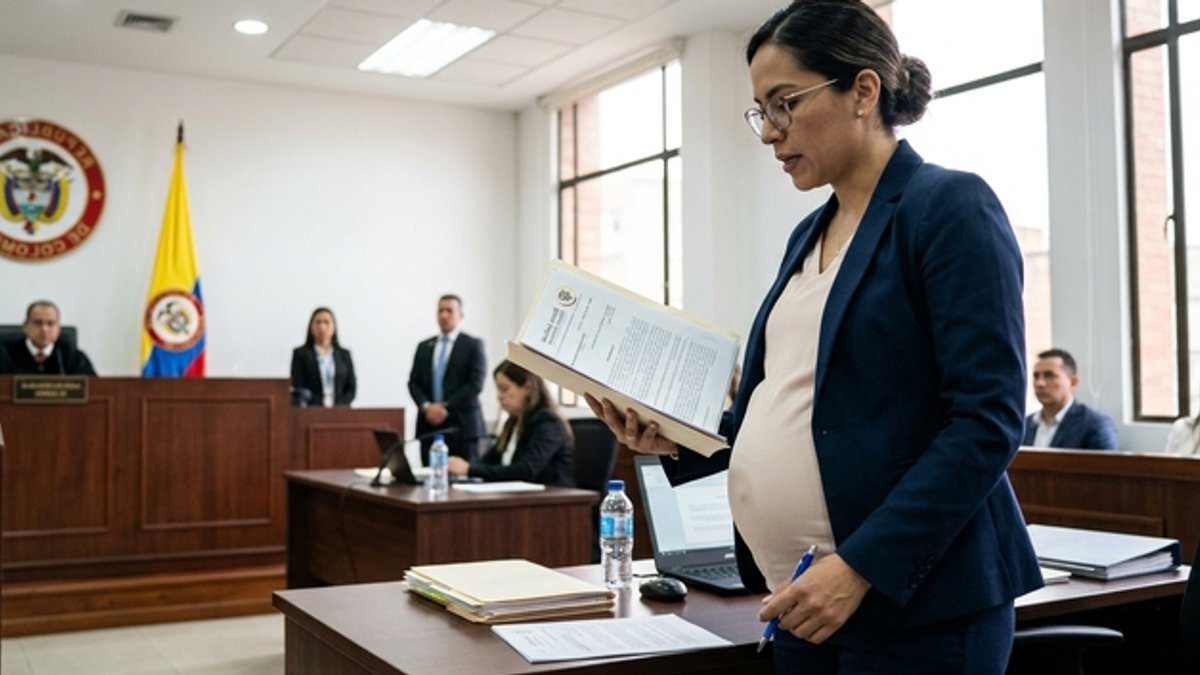
Colombia’s Constitutional Court has ruled that women are not obligated to disclose their pregnancy status when starting a job. The decision came after a judicial employee, Katherine, was dismissed from her provisional position during her pregnancy.
The court’s Sixth Review Chamber stated that provisional employment does not exclude constitutional protections for pregnant women. It clarified that a fixed-term contract alone is not a valid reason to terminate employment.
Pregnancy Disclosure Not Required
Katherine filed a tutela action against the 046 Civil Municipal Orality Court of Bogotá, claiming her fundamental rights were violated when her employment as a scribe was terminated. She had informed her employer about her pregnancy during her contract.
The court ended her employment after the contract period and appointed someone else to the same position. The Sixth Review Chamber emphasized that while provisional employees don’t have indefinite job security, they are entitled to relative job stability.
This includes legal withdrawal and due process, requiring employers to give clear and detailed reasons for termination.
Maternity Rights and Employment
The chamber concluded that Katherine was protected under maternity rights. Her dismissal was presumed discriminatory, as the employer failed to provide an objective and constitutionally acceptable reason for ending her contract.
Read Also: Fraud schemes harming both renters and landlords
The court also addressed the argument that Katherine knew about her pregnancy before starting the job and intentionally withheld this information. It reiterated that women are not required to disclose pregnancy when beginning employment.
Mandating such disclosure can perpetuate gender stereotypes and create barriers for women in the workplace.
The court stressed that protecting maternity rights means preventing pregnancy from becoming a source of discrimination. Authorities and judges must avoid considering reproductive capacity or maternity as relevant factors when denying employment opportunities.
As a result, the court overturned previous decisions and protected Katherine’s fundamental rights to enhanced job stability, non-discrimination, due process, and minimum living conditions. They ordered her reinstatement to the scribe position, provided it is not permanently filled.
If the position is occupied, the employer must find a vacant position of equal hierarchy and, if feasible, offer it to Katherine on a provisional basis, provided she meets the requirements.


