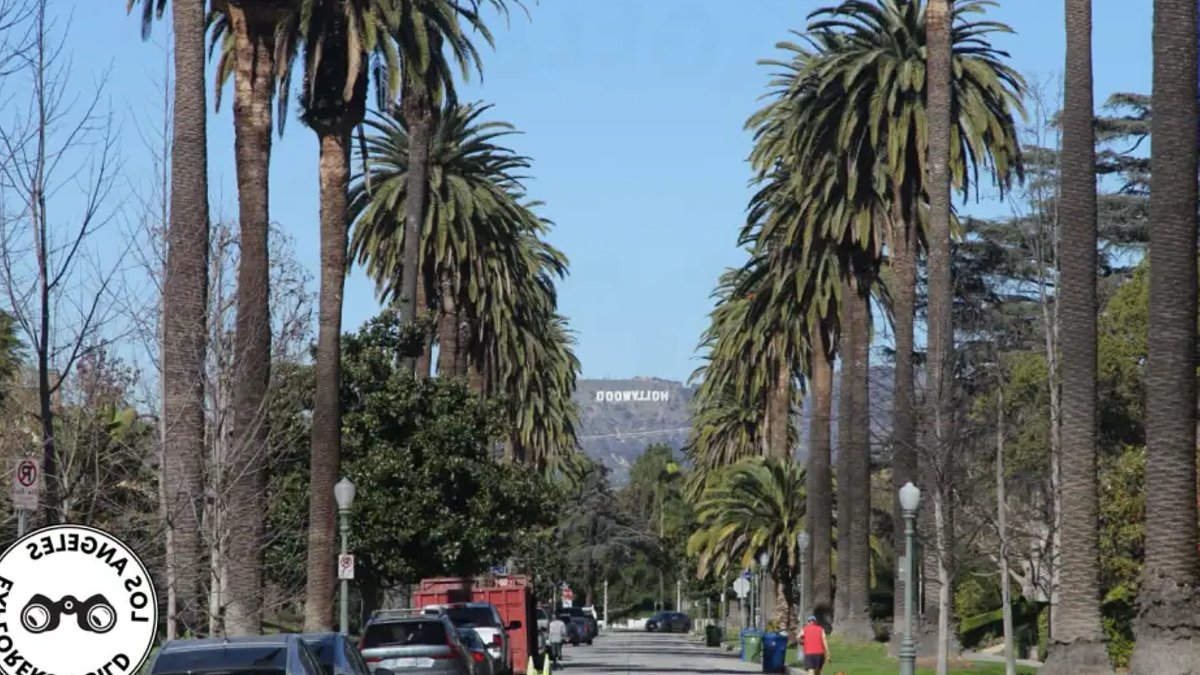
Los Angeles is widely associated with palm trees, an image cemented when Walter O’Malley included towering palms at Dodger Stadium.
Only one palm species naturally occurs in southern California, and it is not the most common variety lining the city’s streets. The proliferation began as part of civic boosterism, with thousands planted ahead of the 1932 Summer Olympics hosted by Los Angeles.
Streets For All has launched a social media campaign titled “Palm trees are a scam” that criticizes palms for high water use, limited shade and potential fire hazards. The group advocates replacing them with broad-canopy trees like sycamores that provide more cooling.
The argument has merit in climate adaptation contexts where shade matters. However, many palm varieties, including the drought-tolerant Canary Island Date Palm, require significant water only during establishment. Once mature, they become resilient to local conditions.
Read Also: Montana lets residents buy unapproved experimental drugs
Calculating the environmental cost of removal versus replacement reveals complexity. The water and carbon emissions needed to uproot existing mature palms, nurture new saplings and manage the transition could outweigh any savings from switching species.
The assumption that shade provision is a zero-sum game also proves problematic. Los Angeles contains hundreds of streets without any tree canopy, particularly in low-income communities of color. Rather than removing existing trees, adding new plantings may address cooling needs more effectively.
Tree-planting initiatives have existed for decades through organizations like Tree People, and former Mayor Antonio Villaraigosa pledged to plant a million trees. A campaign to remove palms generates more immediate buzz and appears more radical than routine reforestation.
The cynical interpretation frames this as participation in the attention economy, where building organizational profile drives engagement more than tangible outcomes. As with many contemporary “radical” movements, market share and visibility may outweigh practical benefits.
Read Also: National Security Used to Bypass Environmental Protections
Environmental horticulturist Dr. Maria Santos notes that palms do not support the same wildlife habitat as native oaks and sycamores. She explains that removing palms could open space for species better adapted to local ecosystems. However, she cautions that wholesale removal would create an immediate void in the urban forest canopy during the several years required for new trees to mature sufficiently.
The City’s Department of Water and Power reports that palms account for approximately 15 percent of the street tree inventory. City arborist James Chen indicates that irrigation systems for palms consume roughly 12 million gallons of water annually during peak summer months. These figures inform the campaign’s central argument about resource allocation.
Counterpoint: Urban forestry consultant Robert Hayes argues that palms provide valuable windbreak protection in Los Angeles’s canyon communities. He cites data from Griffith Park showing that palm groves reduce wind speeds by up to 40 percent, which helps prevent soil erosion on steep slopes. His research suggests palms serve functional purposes beyond aesthetics.


