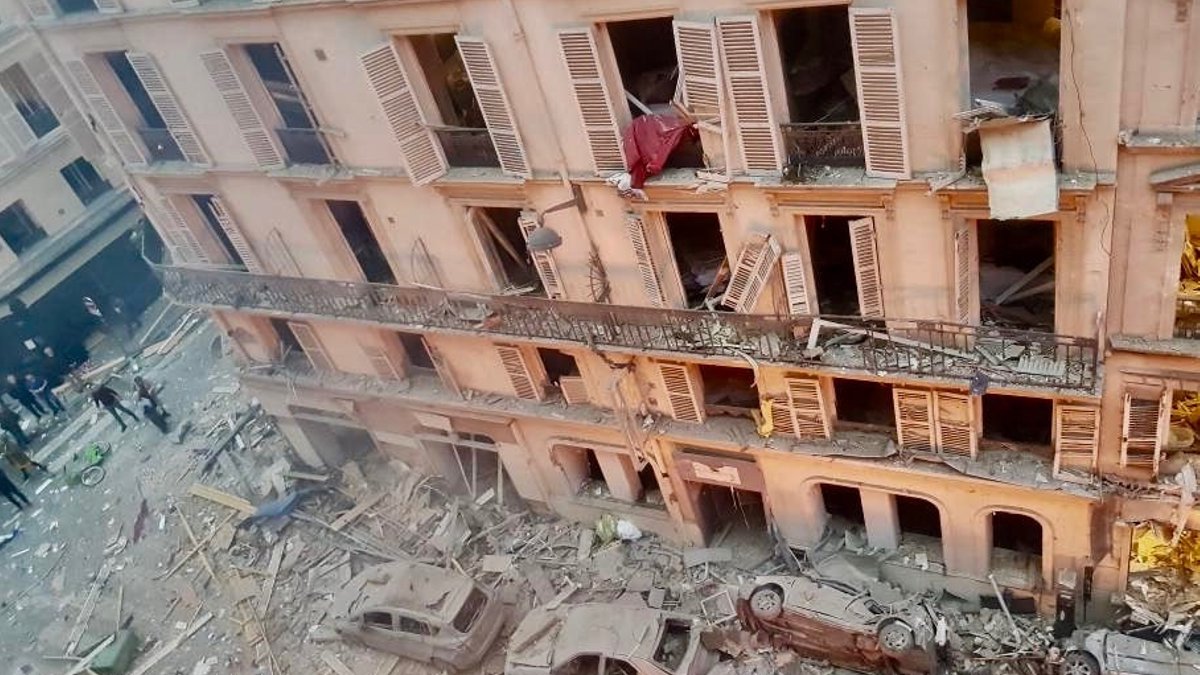
After nearly eight years, the trial over the 2019 explosion on rue de Trévise in Paris has finally begun. The blast, which occurred on January 12, 2019, killed four people and injured sixty-six, with five in critical condition. The explosion, likened to the impact of 30 kg of explosives, devastated the surrounding streets, leaving hundreds homeless.
The trial, which opened on October 20, focuses on charges of negligence and manslaughter against the City of Paris and the building’s management company, CIPA. Both parties have denied responsibility, despite expert findings that the disaster could have been prevented. A 2020 report concluded that the city failed to address a sinking pavement outside 6 rue de Trévise, which had been an issue since 2015. Similarly, CIPA neglected to repair a faulty sewer collector, identified as a critical factor in the explosion.
Years of delays and a reluctant settlement
The victims and their families have endured a lengthy battle for justice and compensation. The city, led by Mayor Anne Hidalgo, initially shifted blame onto local officials and insurers. It took until January 2022 for Hidalgo to sign a €20 million compensation agreement, pressured by the French government. Even then, the process was complicated by the claims handler, Sedgwick, which has only settled 191 out of 500 claims to date, with 34 still pending.
The investigation revealed systemic failures. CIPA, aware of water leaks since 2009, delayed repairs despite warnings from its own staff. The building’s plumber had provided three quotes for collector replacements, but only one was completed.
For those affected, the trial marks the beginning of the end of a grueling fight. Linda Zaourar and Dominique Paris, who represented victims for years, expressed relief as the court proceedings began. The trial will feature technical debates, with experts disagreeing on certain points. Testimony will include families of the deceased, such as Simon Cartannaz, a 29-year-old firefighter, and Laura Sanz Nombela, a 39-year-old Spanish tourist.
The human toll remains at the forefront. Many survivors, including 66 injured this summer, faced further setbacks when their lawyer withdrew. Vulnerable individuals and those abroad will follow the trial via web radio, as the court allows remote access due to high public interest. The verdict is expected on December 7.
Expert disagreements and technical disputes
During the trial, expert witnesses from the civil and criminal proceedings may present conflicting conclusions. While civil experts have not conducted site examinations, their criminal counterparts visited the location eleven times. The criminal experts’ findings will carry more weight in court. Both sides will argue over whether the city and CIPA could reasonably have anticipated that groundwater leaks would compromise the soil stability above a gas line.
The defense will likely emphasize that no prior incident of this nature had occurred in Paris, arguing that the connection between sewer leaks and gas line failure was not foreseeable. The prosecution’s experts maintain that standard urban maintenance protocols should have identified the risk, especially given multiple reports of sinking pavement and recurring water issues.
Expert findings on preventable causes
A judicial investigation ordered in 2020 determined that the explosion on rue de Trévise could have been avoided if the City of Paris had acted on visible signs of ground subsidence outside 6 rue de Trévise. These signs had been documented since 2015, yet no deeper investigation was launched to identify their source. The appointed experts concluded that the city failed to draw necessary conclusions from the ongoing pavement collapse observed over several years.
The same expert report emphasized that CIPA, the building’s managing syndicate, neglected to urgently repair a damaged sewer collector. This defect was officially noted on November 25, 2015, but repairs were not carried out promptly. The experts stated that immediate action following the identification of these faults would have prevented the chain of events leading to the gas line rupture and subsequent explosion.
Work and warning signs overlooked
Fayolle, the company contracted by the city for 2016 repair work, will testify about their limited scope and lack of awareness regarding ongoing subsidence. The site supervisor stated that had they known about the recurring hole formation, they would have recognized underlying structural problems. Experts nonetheless found that Fayolle failed to meet professional standards by not conducting deeper excavations that would have revealed the void beneath the street.
CIPA employees raised internal alarms about basement moisture issues as early as November 2016, but repair requests remained unaddressed. The property manager received three quotes for collector replacements in 2009 but only authorized one. Judges noted that waiting nearly two years for repairs constituted negligence in maintaining building safety and resident welfare.
City records show that between June 2015 and December 2016, municipal workers documented pavement damage five separate times but never investigated underlying causes. These repeated surface-level repairs ignored worsening soil conditions caused by unreported groundwater infiltration. The lack of inter-departmental communication prevented proper risk assessment across city services.
Remote testimony options have been arranged for vulnerable witnesses and those living abroad. The courthouse auditorium has been prepared for public attendance, with web radio broadcasts ensuring broader access. All proceedings will conclude with a verdict scheduled for December 7.


